There is a specific culinary magic that happens when a humble root vegetable meets the ancient, citrusy tang of a Middle Eastern spice cabinet. The Turkish onion salad, known locally as Sumaklı Soğan Salatası, is far more than a simple side dish; it is a vital architectural element of a balanced meal. If you have ever bitten into a street-style kebab and wondered what provided that sharp, bright, and deeply savory crunch, you have found your answer.
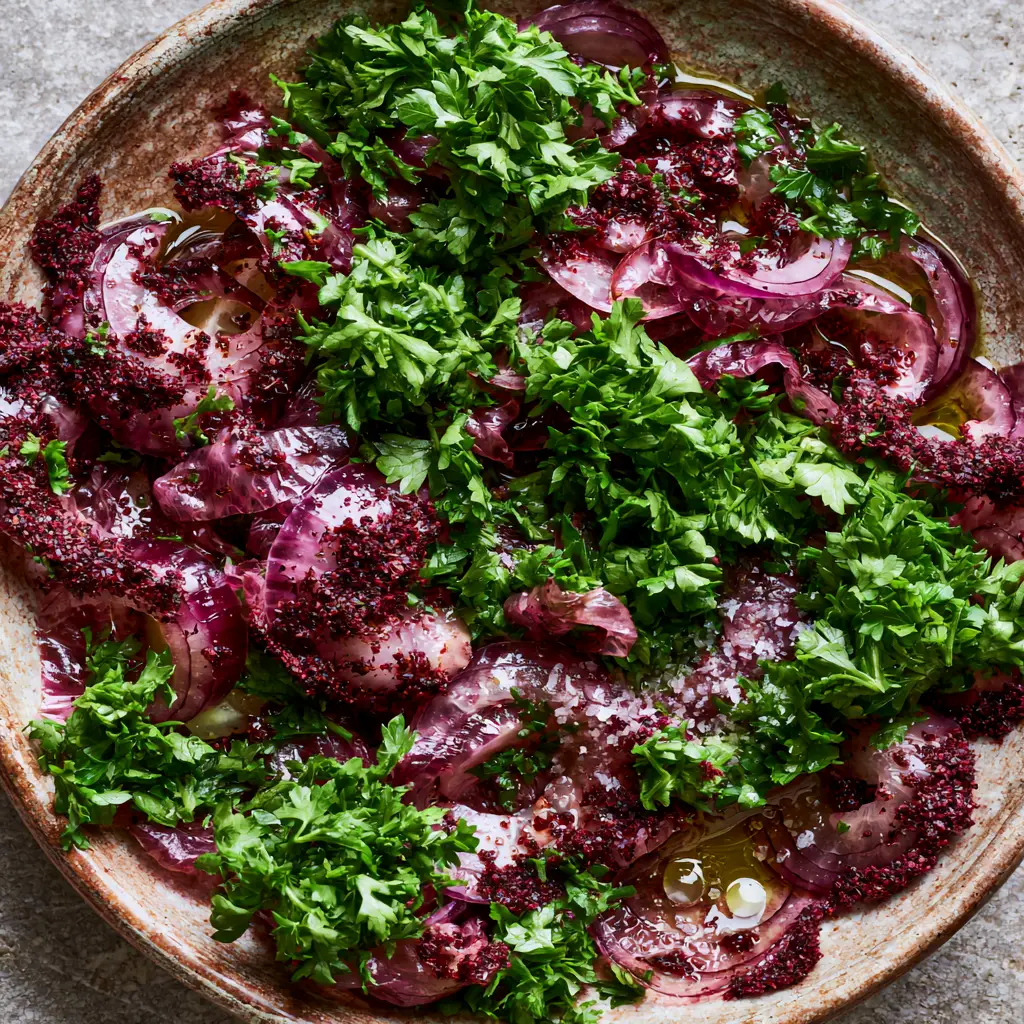
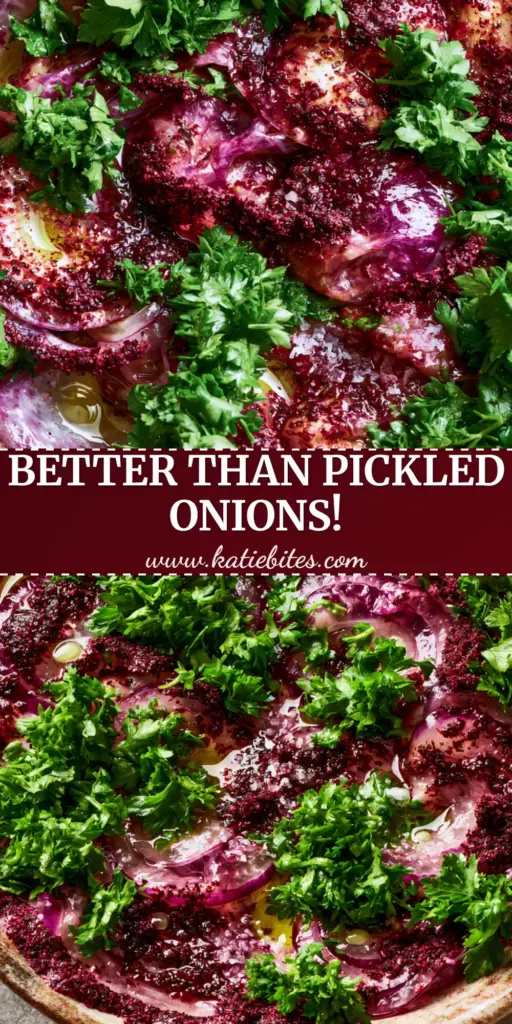
This recipe focuses on achieving a specific forensic visual and textural result: paper-thin, translucent red onion half-moons that possess a soft, wilted texture and a glistening sheen of premium oil. We aren’t just tossing onions in a bowl; we are using salt and acid to transform their cellular structure. The result is a vibrant contrast between the deep purple-red of the onions and the verdant, forest-green of fresh flat-leaf parsley, all tied together by a heavy dusting of burgundy sumac.
By following this guide, you will master the balance of “ovmak”—the traditional Turkish technique of rubbing onions to soften their bite—while maintaining a beautiful aesthetic. Whether you are looking for a way to brighten up your weeknight protein or searching for the perfect accompaniment to your favorite summer salad recipes, this Turkish onion salad is a masterclass in simplicity and flavor.
The Aesthetic Allure of the Perfect Sumac Garnish
- Translucent Texture: Learn how to slice red onions into paper-thin half-moons that catch the light and offer a tender, wilted mouthfeel.
- Vibrant Color Contrast: The deep burgundy of ground sumac creates a stunning visual against the bright green of chopped flat-leaf parsley.
- Glistening Finish: A precise ratio of extra virgin olive oil creates a reflective sheen that signifies freshness and high-quality ingredients.
- Zesty Flavor Profile: The combination of lemon juice droplets and flaky sea salt provides an immediate sensory pop that cuts through rich, fatty meats.
Essential Components for a Glistening Turkish Onion Salad
To achieve the result shown in our visual blueprint, every ingredient must be selected for its specific contribution to the flavor and structural integrity of the dish. This is a salad where the quality of the raw components cannot be hidden.
Red Onions (2 medium / approx. 400g): These provide the base structure. We look for onions that are firm with tight skins, allowing us to achieve those paper-thin, translucent half-moons that are characteristic of a professional Turkish onion salad.
Ground Burgundy Sumac (2 tbsp / 12g): This is the soul of the dish. Ground from dried berries of the Rhus coriaria shrub, it provides a tart, lemony flavor and that iconic dark red dust that clings to the edges of the wilted onions.
Fresh Flat-Leaf Parsley (1 bunch / approx. 40g): Unlike curly parsley, flat-leaf (Italian) parsley offers a robust, peppery flavor and a clean visual silhouette that folds effortlessly into the onion layers.
Extra Virgin Olive Oil (3 tbsp / 45ml): The oil serves as the medium for the sumac to bloom. It creates the glistening sheen required for that high-resolution, macro-shot finish while adding a buttery, peppery undertone.
Fresh Lemon Juice (1.5 tbsp / 22ml): Acid is essential for “cooking” the onions slightly, softening their harsh sulfur compounds and keeping the red pigments vibrant rather than dull.
Flaky Sea Salt (1 tsp / 5g): We use flaky salt specifically for the “reflecting light” effect. Beyond seasoning, the salt draws out moisture, contributing to the soft, wilted texture of the salad.
Professional Tools for Paper-Thin Precision
Achieving a macro-shot worthy Turkish onion salad requires more than just a standard kitchen knife. To get that translucent, paper-thin half-moon shape, a Japanese mandoline is your best friend. It allows for consistent thickness (less than 1mm) which ensures that every onion slice wilts at the same rate when the salt and acid are applied.
You will also need a rustic, shallow ceramic bowl. This choice isn’t just for style; the shallow depth allows the onions to be spread out, preventing them from becoming a soggy heap. It ensures the burgundy sumac and lemon juice droplets are visible across the entire surface area of the salad. A sharp chef’s knife is also necessary for finely chopping the parsley into abundant clusters that don’t look bruised.
The Art of Macerating and Folding Your Ingredients
Step 1: Achieving the Paper-Thin Half-Moons
Begin by peeling your red onions and slicing them in half from pole to pole. Using your mandoline or a very sharp knife, slice the onions into the thinnest possible half-moons. They should be so thin that they appear translucent when held up to the light. This is the first step in ensuring the final Turkish onion salad has that delicate, professional appearance.
Step 2: The Softening (Ovmak) Technique
Place your onion slices in a bowl and sprinkle them with half of your flaky sea salt. Use your hands to gently massage and “scrunch” the onions for about 30 seconds. This traditional Turkish technique breaks down the cell walls, removing the raw “sting” of the onion and resulting in the soft, wilted texture described in our visual blueprint. If you prefer a milder taste, you can rinse the onions under cold water after this step and pat them dry, though many purists skip the rinse.
Step 3: Infusing with Burgundy Sumac
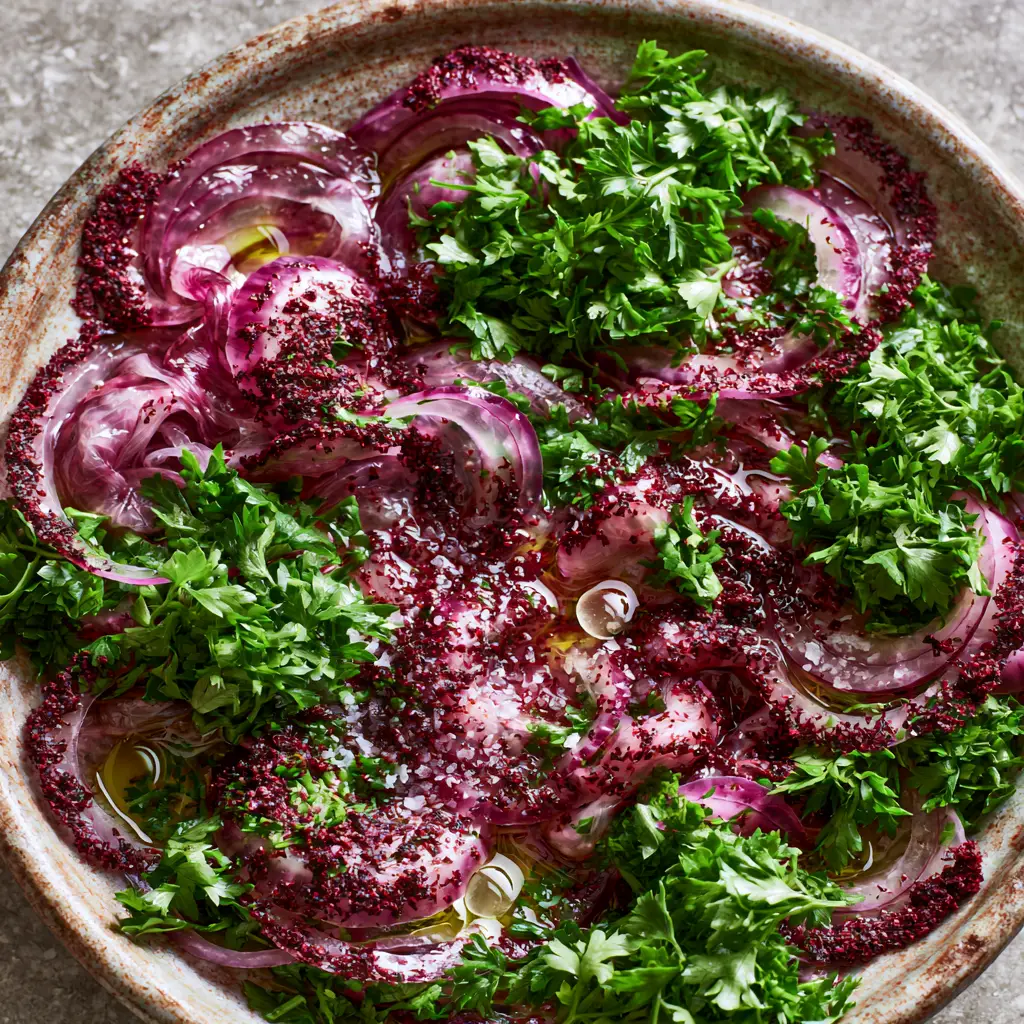
Add the ground sumac to the onions. Do not just sprinkle it on top; fold it through so the burgundy powder clings to the edges of the translucent onions. The acid in the sumac will immediately begin to interact with the moisture of the onions, creating a deep, vibrant red hue that defines a classic Turkish onion salad.
Step 4: Incorporating the Verdant Parsley
Finely chop your flat-leaf parsley, ensuring you have abundant clusters. Fold the parsley into the sumac-coated onions. You want a distribution that creates a high-contrast visual—bright green against deep burgundy. Avoid over-mixing; the parsley should look fresh and lofted, not crushed into the onions.
Step 5: The Glistening Finish
Drizzle the extra virgin olive oil over the mixture, followed by the lemon juice. The oil should create a glistening sheen that coats each strand of onion. Finally, sprinkle the remaining flaky sea salt over the top. The salt should sit on the surface, reflecting light and providing a final hit of texture. Your Turkish onion salad is now ready for its close-up.
Chef’s Secrets for Perfecting the Texture
- Chill Your Onions: For the cleanest slices, chill your red onions in the refrigerator for 30 minutes before cutting. This firms up the layers.
- The Sumac Bloom: Allow the salad to sit for 5-10 minutes before serving. This gives the sumac time to “bloom” in the oil and lemon juice, intensifying the color.
- The Parsley Ratio: Use more parsley than you think. In a true Turkish onion salad, the parsley is treated as a leaf vegetable, not just a garnish.
- Salt Selection: Never use table salt for the final seasoning. The flat, wide crystals of flaky sea salt are essential for both the crunch and the visual sparkle.
Optimal Storage for Keeping Your Onions Bright
While this salad is best served fresh—when the onions are at their peak of “soft yet structured”—it can be stored in an airtight container in the refrigerator for up to 2 days. Be aware that the longer it sits, the more the red onion pigment will bleed into the parsley, turning it a slight pinkish hue.
We do not recommend freezing this Turkish onion salad, as the freezing and thawing process will destroy the delicate cellular structure of the macerated onions, leaving them mushy rather than wilted. If you have leftovers, they are excellent when folded into a zesty pasta dish the next day for an extra punch of acidity.
Beyond the Kebab: Pairing Your Salad
Traditionally, this salad is the soulmate of grilled meats like Adana kebabs, köfte, or lamb chops. However, its versatility allows it to shine alongside various cuisines. The sharp acidity makes it a fantastic palate cleanser between bites of a rich creamy pasta salad or a smoky BBQ spread.
If you are hosting a summer gathering, consider serving it next to a refreshing watermelon salad for a beautiful spread of contrasting colors and global flavors. The onions also work wonders as a topping for fish tacos or as a zesty addition to a crisp cucumber salad platter.
Your Pressing Questions Answered
While sumac has a unique citrusy and earthy profile, if you cannot find it, you can use extra lemon zest and a pinch of paprika for color, though the flavor won’t be exactly the same.
It is best eaten within 2-4 hours for peak freshness. While it can be stored in the fridge for 2 days, the onions will continue to soften and the parsley may lose its bright green color.
Yes, this recipe is naturally gluten-free, vegan, and keto-friendly, making it an excellent versatile side dish for almost any dietary requirement.
For the most authentic texture, use a Japanese mandoline to slice the onions into paper-thin, translucent half-moons. This allows the dressing to penetrate the onion quickly, resulting in a tender, wilted feel.
Rubbing the onions with salt (a technique called ‘ovmak’) breaks down the harsh sulfur compounds and softens the cell walls. This removes the bitter ‘bite’ of raw onions and creates a softer texture.
The Definitive Turkish Sumac Onion Salad Recipe
Turkish Onion Salad: The Ultimate Sumac and Parsley Garnish
Ingredients
Equipment
Method
- Slice the red onions into paper-thin, translucent half-moons using a mandoline or sharp knife.
- Place onions in a bowl with a pinch of salt. Gently rub the onions with your hands for 30 seconds until they become soft and wilted.
- Add ground sumac and chopped parsley. Fold together until the burgundy sumac clings to the onion edges.
- Drizzle with olive oil and lemon juice. Sprinkle with flaky sea salt just before serving to ensure a glistening sheen.
Notes
Use fresh lemon juice rather than bottled for the most vibrant flavor profile.
Closing & Call to Action
Mastering the Turkish onion salad is a rite of passage for any home cook looking to elevate their garnish game. It proves that with the right technique and high-quality ingredients, even the most basic pantry staples can be transformed into a culinary masterpiece. The combination of pungent onion, tart sumac, and peppery parsley creates a flavor profile that is truly addictive.
If you enjoyed this deep dive into Turkish flavors, please leave a comment below and let us know how your salad turned out! Don’t forget to follow us on Pinterest for more visually stunning recipe inspiration. Share your glistening salad photos with us—we love seeing your kitchen creations!