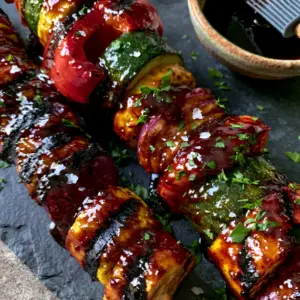
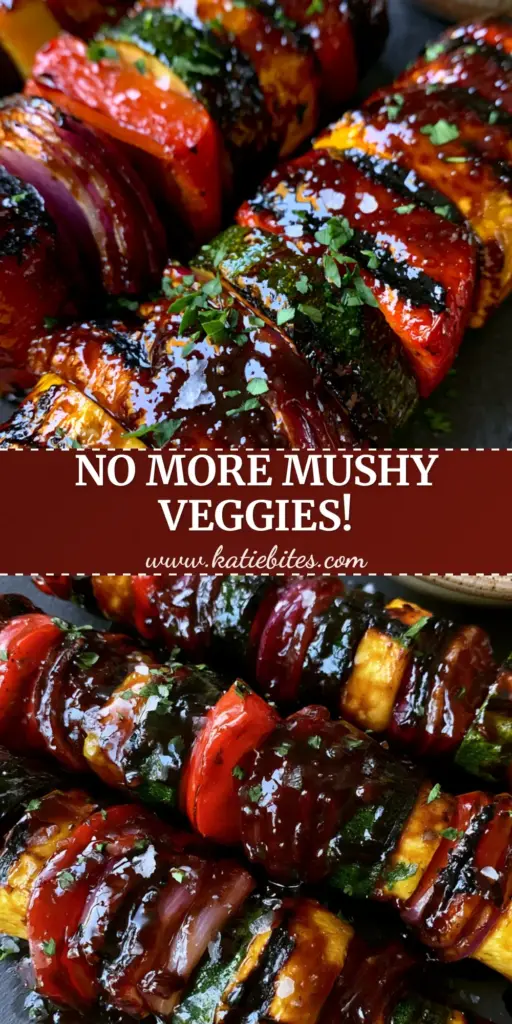
This vegetable kabobs recipe is the ultimate celebration of summer’s bounty, transforming humble garden produce into a high-end culinary experience. Imagine the scent of sweet red onions caramelizing over an open flame, paired with the crisp-tender bite of blistered zucchini and vibrant yellow squash. Every skewer is a hand-crafted rainbow, finished with a mahogany-dark balsamic reduction that bubbles and clings to every charred edge.
Whether you are hosting a backyard barbecue or looking for a sophisticated plant-based dinner, these skewers deliver a masterclass in texture and flavor. We are moving beyond the watery, unseasoned vegetables of the past. By focusing on high-heat searing and a syrupy glaze, we achieve deep black grill marks and specular highlights that look as good as they taste.
To make this meal even more complete, consider pairing these vibrant skewers with a summer garden pasta for a full seasonal feast. The combination of grilled char and fresh pasta creates a balanced profile that satisfies even the most dedicated carnivores.
The Anatomy of a Perfect Rainbow Vegetable Skewer
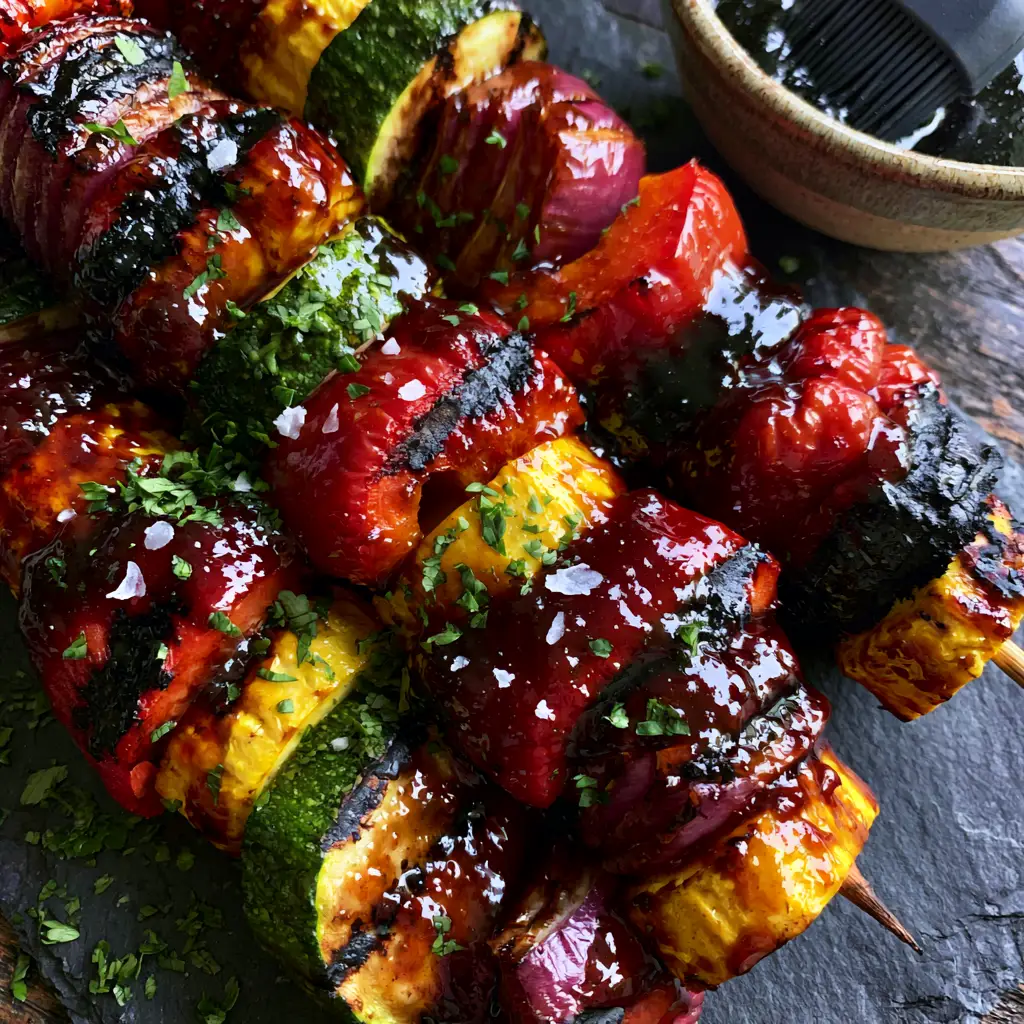
What makes this vegetable kabobs recipe stand out from the thousands of others on the internet? It is the forensic attention to detail in the preparation of each specific vegetable. We aren’t just tossing them in oil; we are treating each component like a steak, ensuring the heat creates a Maillard reaction for maximum sweetness.
- Charred Red Bell Pepper Chunks: These provide a smoky, candy-like sweetness when the skins are allowed to blister and blacken slightly.
- Blistered Zucchini Rounds: Cut thick to maintain a structural “snap” while the exterior develops a beautiful golden-brown crust.
- Caramelized Red Onion Wedges: These soften into sweet, savory layers that provide the backbone of the skewer’s flavor profile.
- Seared Yellow Squash: A mild, buttery counterpart that absorbs the balsamic glaze perfectly without becoming mushy.
- Glossy Balsamic Reduction: A thick, mahogany-colored glaze that creates a professional, high-end food blog aesthetic.
Essential Ingredients for Your High-End Vegetable Skewers
To achieve the result seen in professional food photography, we need both the visible stars of the show and the invisible foundational ingredients. Every measurement is calculated to ensure the vegetables are seasoned to the core while maintaining their vibrant colors.
Red Bell Peppers (2 large): Look for peppers with firm, shiny skin; they provide the essential red hue and a robust structure for the skewer. Cut them into 1.5-inch (4cm) squares to ensure they don’t fall off during the flip.
Zucchini and Yellow Squash (2 each): Choose medium-sized squash for the best seed-to-flesh ratio. We will cut these into 3/4-inch (2cm) thick rounds to withstand the intense heat of the grill.
Red Onion (1 large): Red onions are preferred for their color and high sugar content, which leads to superior caramelization. Leave the root end slightly intact when cutting wedges to keep the layers from separating on the grill.
Balsamic Vinegar (1 cup / 240ml): Use a decent quality balsamic for the reduction. As it simmers, the acidity mellows, and the sugars concentrate into a thick, syrupy glaze.
Honey or Maple Syrup (2 tbsp / 30ml): This is our secret “thickening” agent. It helps the glaze achieve that bubbling, glossy finish that catches the light beautifully.
Extra Virgin Olive Oil (3 tbsp / 45ml): A foundational invisible ingredient required for high-heat searing. It prevents the vegetables from sticking to the grates and facilitates even heat distribution.
Maldon Flaky Sea Salt (1 tsp / 5g): Unlike table salt, these large flakes provide a burst of seasoning and a beautiful visual texture. It’s the finishing touch that makes the colors “pop.”
Fresh Flat-Leaf Parsley (2 tbsp / 10g): Finely chopped and scattered at the very end. The bright green provides a sharp contrast to the dark mahogany glaze.
Professional Culinary Tools for Grilling Success
To recreate the vegetable kabobs recipe exactly as described, you need the right tools for the job. A dark slate platter is recommended for serving to make the colors of the vegetables appear more vibrant.
High-Quality Skewers: If using bamboo skewers, soak them in water for at least 30 minutes to prevent them from burning. For a more professional look, use flat metal skewers which prevent the vegetables from spinning when you try to flip them.
Small Ceramic Bowl and Silicone Brush: You will need these for the “basting” phase. The silicone brush is essential for pushing the thick glaze into the nooks and crannies of the charred peppers.
Cast Iron Grill Pan or Outdoor Grill: To get those deep black grill marks, you need a surface that retains high heat. A cast-iron pan is perfect for indoor cooking, while a charcoal grill adds an extra layer of smoky depth.
How to Master the Mahogany Balsamic Reduction
Simmering for Depth and Texture
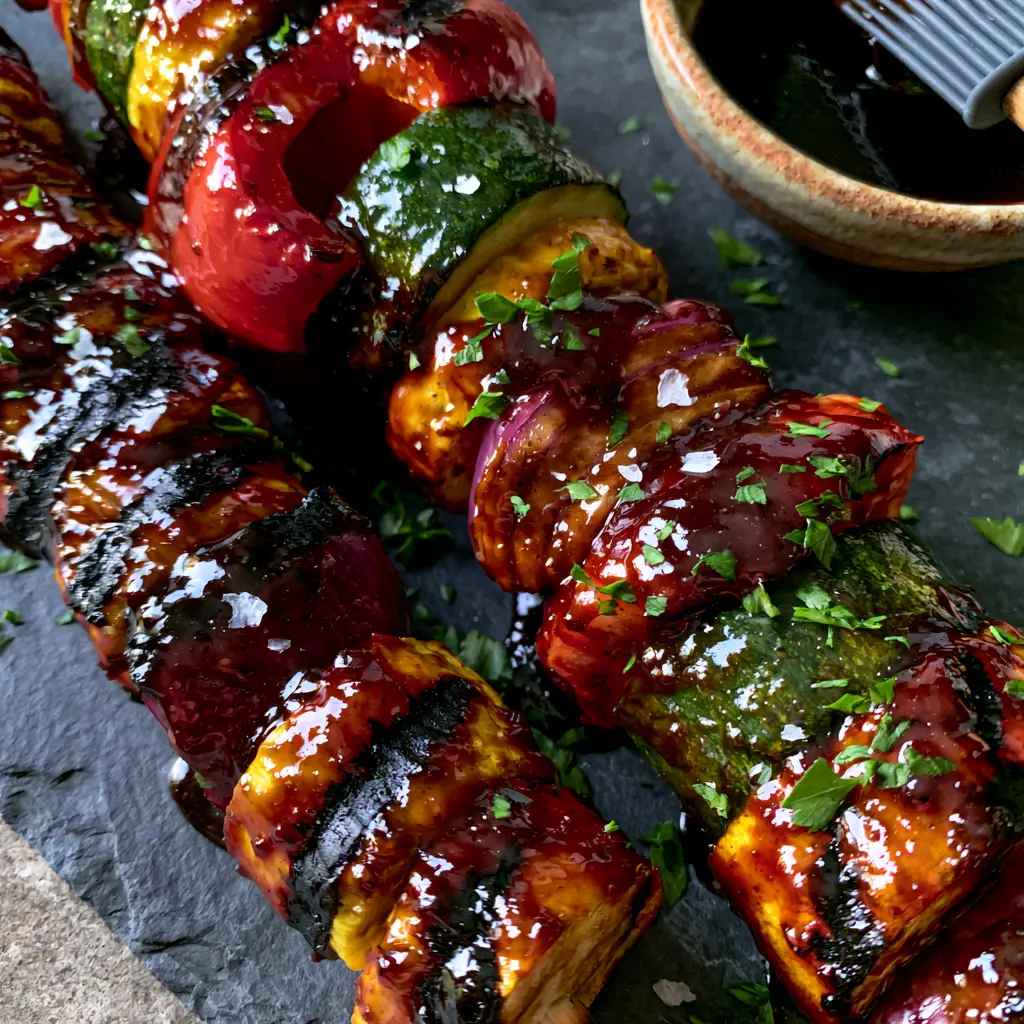
In a small saucepan over medium heat, combine your 1 cup (240ml) of balsamic vinegar and 2 tbsp (30ml) of honey. Bring the mixture to a gentle simmer, but do not let it boil vigorously, as this can make the glaze bitter.
Whisk occasionally as the liquid reduces by half. You are looking for a consistency that coats the back of a spoon—it should look like warm maple syrup. Once it reaches this stage, remove it from the heat; it will thicken significantly as it cools into a glossy, dark mahogany glaze.
The Art of the Rainbow Skewer Assembly
Consistency is the hallmark of a professional chef. Assemble your skewers in a strict “rainbow sequence” to ensure a beautiful presentation. Start with the red bell pepper, followed by the zucchini round, the red onion wedge, and finally the yellow squash.
Repeat this pattern until the skewer is full, leaving about 2 inches (5cm) at the bottom for a handle. Press the vegetables together firmly but not too tightly—air needs to circulate around each piece to ensure the edges get those specific charred marks.
The Searing Phase: Achieving Visual and Sensory Cues
High-Heat Searing for Maximum Flavor
Preheat your grill to medium-high heat (about 400°F / 200°C). Brush your assembled skewers generously with olive oil and season with freshly cracked black pepper. Do not add the salt yet; we want the salt to stay flaky on the surface for the final presentation.
Place the skewers on the hot grates. You should hear an immediate, loud sizzle—this is the sound of the moisture on the surface evaporating and the caramelization process beginning. Leave them undisturbed for 4-5 minutes.
Basting for a Glossy, Bubbling Finish
Once you see deep black grill marks on the underside, flip the skewers. Now, using your silicone brush, coat the charred side of the vegetables with a thick layer of the balsamic reduction. You will see the glaze start to bubble slightly as it hits the hot vegetables.
Continue to grill for another 4 minutes, then give the skewers one final turn and a second coating of glaze. The vegetables should be tender but still have a distinct structural integrity. They should look vibrant, glossy, and intensely colored.
Expert Tips for a Fail-Proof Vegetable Kabobs Recipe
- Uniform Cutting: Use a ruler if you have to! Ensuring all your zucchini and squash rounds are the same thickness means they will all finish cooking at exactly the same time.
- Don’t Overcrowd: If the vegetables are packed too tightly, they will steam instead of sear. Leave a tiny bit of “breathing room” between each piece.
- The “Double Skewer” Trick: If you find your vegetables are spinning, use two parallel skewers for each row of veggies. This makes flipping 100% easier.
- Temperature Control: If the glaze starts to smell like it’s burning, move the skewers to a cooler part of the grill. The sugar in the balsamic can burn quickly if left over a direct flame too long.
Strategic Pairings for a Complete Meal
While this vegetable kabobs recipe is a star on its own, it pairs beautifully with other summer staples. Try serving it alongside a classic caprese pasta salad to lean into those Italian-inspired flavors of balsamic and basil.
For a lighter, fruitier side that cuts through the richness of the balsamic glaze, a refreshing watermelon and feta salad is the perfect companion. The salty feta and sweet watermelon provide a cooling contrast to the smoky, charred skewers.
If you have leftover grilled vegetables, they are incredible the next day tossed into a lemony summer squash pasta, providing a pre-cooked boost of smoky flavor to your lunch.
Storage and Reheating Guidelines
These kabobs are best served fresh off the grill while the glaze is still bubbling and the salt is crunchy. However, leftovers can be stored in an airtight container in the refrigerator for up to 3 days.
To reheat, avoid the microwave, as it will make the vegetables mushy. Instead, place them in a 350°F (175°C) oven or back on a grill pan for 5-7 minutes. This helps re-crystallize the sugars in the glaze and restores some of the original texture.
Frequently Asked Questions
Yes! You can make the balsamic glaze up to two weeks in advance. Store it in a sealed jar at room temperature. If it becomes too thick to brush, simply microwave it for 10 seconds to loosen it up.
No, you should keep the skin on. The skin provides the structural integrity needed to stay on the skewer and develops a beautiful blistered texture that holds onto the glaze.
Cut your vegetables into uniform, thick chunks (about 1.5 inches) and ensure you are using sturdy skewers. If using bamboo, the friction helps, but for heavy vegetables like squash, double-skewering (using two parallel sticks) provides the most stability.
Dense vegetables with high moisture content like bell peppers, zucchini, yellow squash, and red onions are ideal because they hold their shape under high heat while their natural sugars caramelize beautifully.
This usually happens if the grill isn’t hot enough or if the vegetables are packed too tightly together. Ensure your grill is preheated to at least 400°F and leave a small gap between each vegetable chunk to allow for air circulation.
The Ultimate Charred Vegetable Kabobs Recipe
Vegetable Kabobs Recipe with Thick Balsamic Glaze and Charred Summer Veggies
Ingredients
Equipment
Method
- Combine balsamic vinegar and honey in a small saucepan over medium heat. Simmer until reduced by half, reaching a thick, syrupy consistency that coats a spoon. Set aside to cool.
- Wash and cut red peppers, zucchini, yellow squash, and red onion into uniform pieces. Soak bamboo skewers in water for 30 minutes if using.
- Thread vegetables onto skewers in a rainbow sequence (pepper, zucchini, onion, squash). Brush generously with olive oil and season with black pepper.
- Place skewers on a preheated grill over medium-high heat. Sear for 4-5 minutes until deep black grill marks appear. Flip and brush heavily with the balsamic reduction using a silicone brush.
- Grill for another 4-5 minutes, basting once more until the glaze is bubbling and glossy. Remove from heat, sprinkle with Maldon sea salt and fresh parsley.
Notes
Cut vegetables thick to prevent them from becoming too soft during the reduction basting.
Join the Community and Share Your Creations!
We hope this vegetable kabobs recipe becomes a permanent fixture in your summer rotation. There is something deeply satisfying about the process of skewering fresh produce and watching it transform over a flame into a glossy, charred masterpiece.
Did you try a different glaze? Or perhaps you added some mushrooms to your rainbow? Let us know in the comments below! Don’t forget to follow katie_bites on Pinterest for more visual recipe inspiration and share your photos with us. Happy grilling!