When the golden hour hits and the summer heat lingers on the patio, nothing refreshes the palate quite like these watermelon canapes. This isn’t just a snack; it’s a study in culinary contrast, bringing together the icy crunch of fruit with the savory depth of premium cheese.
In this recipe, we are moving beyond the basic fruit salad to create a handheld masterpiece that looks as good as it tastes. We focus on achieving that specific, vibrant ruby-red hue and the glistening, high-viscosity drizzle that defines professional food photography.
Whether you are hosting a high-end garden party or looking for a sophisticated way to cool down, these bites deliver a symphony of textures. Let’s dive into how to construct the perfect stack that stays crisp and delicious until the very last bite.
The Visual Allure of Gourmet Watermelon Appetizers
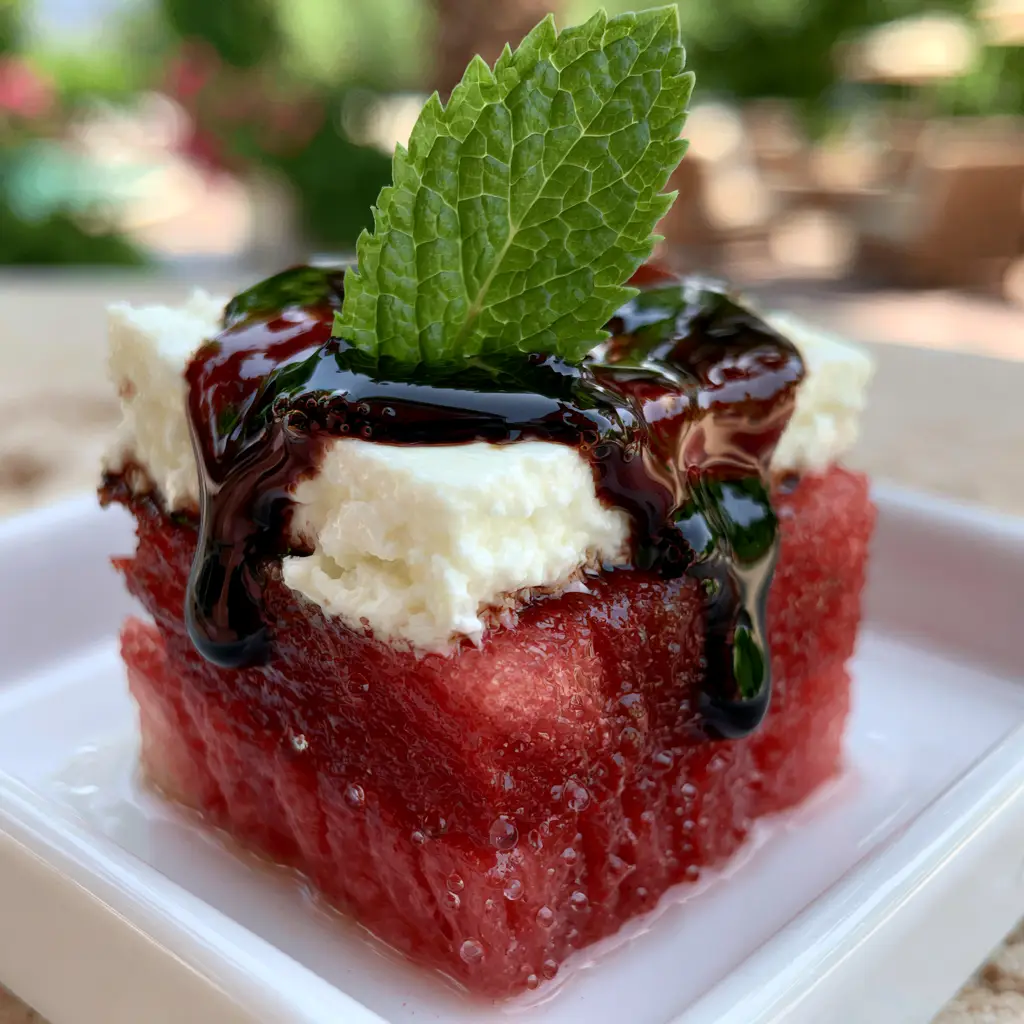
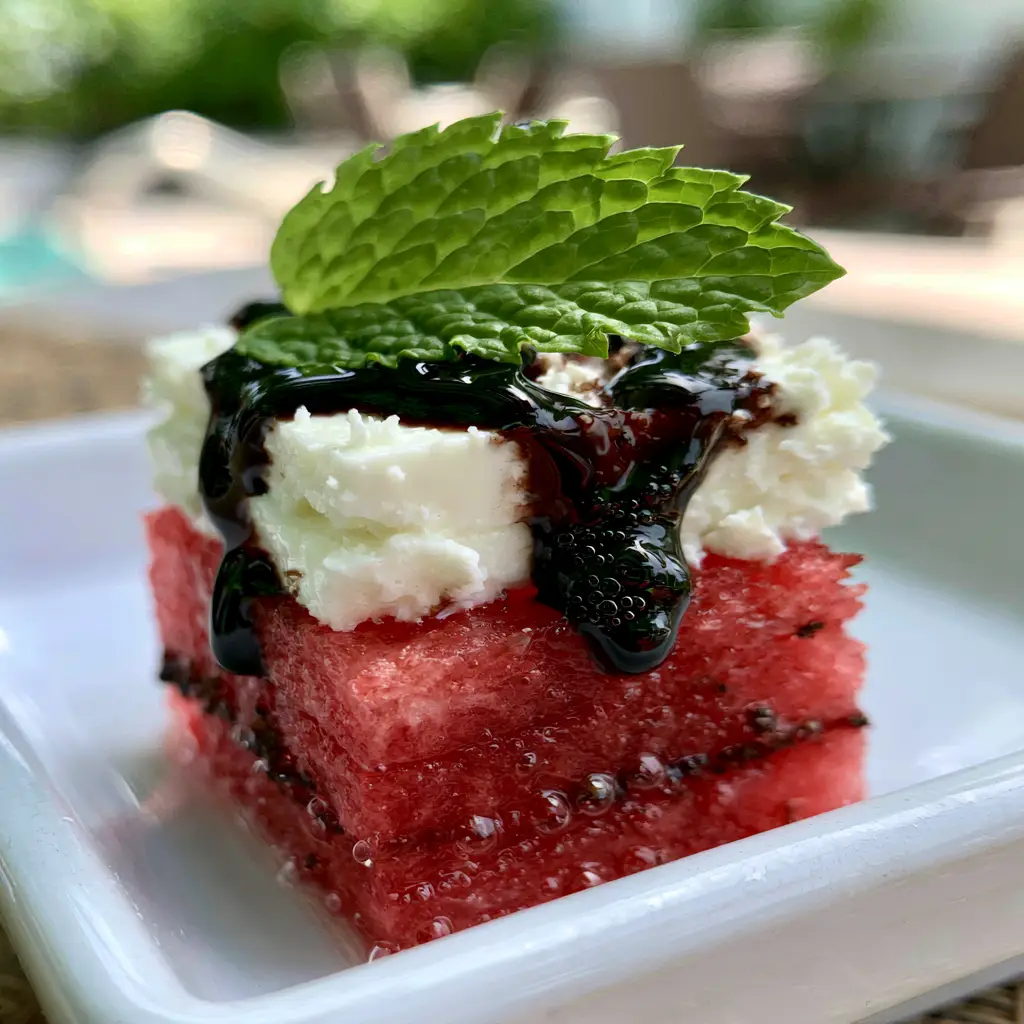
- Textural Contrast: The crisp, visible cell structure of cold watermelon paired with a creamy, dense slab of feta cheese.
- Saturated Colors: A striking palette of vibrant ruby-red, stark white, and bright serrated green mint leaves.
- The Glaze Factor: A thick, ebony balsamic reduction that clings to the fruit with artistic, high-viscosity drips.
- Sensory Cues: Tiny glistening water droplets on the fruit suggest immediate freshness and a cold serving temperature.
Essential Components for the Perfect Bite
To achieve the elite results seen in professional food styling, every ingredient must be selected for its structural integrity and flavor profile. These are the building blocks of your watermelon canapes.
Seedless Red Watermelon: Look for a heavy, firm melon that sounds hollow when tapped; this ensures the “crisp cell structure” required for a stable base. You will need about 1/2 of a large melon to yield enough uniform 1-inch (2.5cm) cubes.
Premium Block Feta Cheese: Avoid pre-crumbled varieties, which lack the “creamy white slab” aesthetic. Instead, opt for a high-quality Greek feta stored in brine, which allows you to slice precise, uniform squares.
Fresh Whole Mint Leaves: Select a bunch with bright green, serrated edges and no bruising. The mint provides a cooling aromatic finish that bridges the gap between the sweet fruit and salty cheese.
Thick Balsamic Glaze Reduction: This must be a reduction, not a thin vinegar. A high-quality glaze will show micro-bubbles and a glossy, dark ebony sheen that doesn’t immediately run off the fruit.
Fine Sea Salt: A foundational “invisible” ingredient. A tiny pinch on the watermelon before assembly draws out the natural sugars and enhances the “vibrant ruby” appearance.
Must-Have Tools for Precision Plating
To recreate the macro, sharp-focus look of our visual blueprint, you need tools that prioritize geometric precision. While you can use a knife, these items elevate the final presentation of your watermelon canapes.
Large Chef’s Knife: Essential for squaring off the watermelon and creating those flat, professional surfaces. A sharp blade prevents bruising the delicate fruit cells.
Uniform Square Cutter (Optional): If you want absolute mathematical perfection for your cubes, a 1-inch (2.5cm) square pastry cutter is a game-changer. It ensures every canape is identical on the minimalist white ceramic platter.
Precision Tweezers: Used by stylists to place that “single, bright green mint leaf” perfectly in the center of the feta slab without smudging the balsamic glaze.
Step-by-Step Construction of Watermelon Canapes
Preparing the Watermelon Foundation
Start by slicing the ends off a cold watermelon. Stand it upright and carefully shave away the rind until only the vibrant red flesh remains. Square off the sides to create a large rectangle of fruit.
Slice the melon into 1-inch (2.5cm) thick planks, then cut those planks into 1-inch (2.5cm) cubes. Place the cubes on a paper-towel-lined tray and refrigerate for 20 minutes; this allows excess moisture to be absorbed, ensuring your watermelon canapes don’t slide around the plate.
Slicing the Feta Slabs
Remove the feta block from its brine and pat it dry with a lint-free cloth. Using a sharp, non-serrated knife, slice the feta into squares that are slightly smaller than your watermelon cubes (about 3/4 inch or 2cm) and 1/4 inch (0.6cm) thick.
The goal is a “neat, creamy white slab” that sits firmly atop the fruit base. If the feta is too crumbly, dip your knife in warm water between slices to ensure a clean, smooth edge.
The Art of the Balsamic Drizzle
Once you have stacked a feta slab onto each watermelon cube, it is time for the glaze. Using a squeeze bottle or a small spoon, drizzle the thick balsamic glaze in a zig-zag motion.
Look for the “high-viscosity drips” mentioned in our blueprint. The glaze should be thick enough to hold its shape for several minutes. If your glaze is too thin, simmer it in a small saucepan for 5-8 minutes until it coats the back of a spoon before using.
Finishing with the Mint Garnish
Pick the smallest, most vibrant mint leaves from your bunch. Place one leaf atop each cheese slab. The contrast of the serrated green leaf against the ebony glaze and white cheese creates the “macro photo” quality we are aiming for.
Expert Tips for Appetizer Success
- Temperature Control: Always serve these “cold.” The temperature is what keeps the watermelon cells “crisp” and prevents the feta from becoming too soft.
- The Salt Secret: If your watermelon tastes a bit muted, a microscopic sprinkle of sea salt before adding the cheese will make the flavor pop.
- Preventing Soggy Bases: If you are making these for a party, assemble them no more than 30 minutes before serving. Watermelon is 92% water and will eventually release juice.
- Glaze Consistency: If your balsamic glaze has micro-bubbles, it indicates a perfect reduction. If it looks watery, it will bleed into the white feta and ruin the visual.
Optimal Storage and Make-Ahead Advice
Because of the high water content in the fruit, watermelon canapes are best enjoyed immediately. However, you can prep the components in advance to save time during your event.
Store the cubed watermelon and sliced feta in separate airtight containers in the refrigerator for up to 24 hours. Do not assemble until you are ready to serve. Leftover assembled canapes can be stored for about 4 hours, but the mint may wilt and the balsamic may bleed.
Do not freeze this recipe. Freezing destroys the delicate cell structure of the watermelon, turning it mushy upon thawing, which ruins the “vibrant ruby-red” aesthetic.
Creative Pairings for Your Summer Spread
These canapes are the perfect opening act for a full summer menu. To keep the refreshing theme going, consider serving them alongside a hearty watermelon feta salad for those who prefer a bowl format.
For a complete Mediterranean-inspired spread, these bites pair beautifully with a peach arugula salad or a light caprese pasta salad. If you’re hosting a larger gathering, they provide a cool counterpoint to spicy dishes like a mexican watermelon salad.
Looking for more summer inspiration? Check out our curated list of summer dinner ideas to find the perfect main course to follow these appetizers.
Frequently Asked Questions
It is best to prep the ingredients (cubing the melon and slicing the cheese) up to 24 hours ahead, but assemble the canapes no more than 30 minutes before serving to prevent the fruit from becoming soggy.
For the specific visual of a ‘creamy white slab,’ block feta is required. Crumbled feta won’t stay stacked on the watermelon cubes and will result in a messy presentation.
Use a store-bought balsamic reduction or simmer balsamic vinegar in a saucepan until it reduces by half. It should have a syrupy consistency and show micro-bubbles.
Yes, a tiny pinch of fine sea salt enhances the natural sweetness of the watermelon and helps the ‘ruby red’ color pop visually.
Square off the melon by removing the rind, then slice it into 1-inch thick planks. Use a sharp chef’s knife or a square pastry cutter to create uniform cubes with sharp edges.
The Ultimate Watermelon Feta Canape Recipe
Watermelon Canapes with Creamy Feta and Balsamic Glaze
Ingredients
Equipment
Method
- Slice cold watermelon into 1-inch (2.5cm) thick planks, then into uniform cubes. Pat dry with paper towels to ensure glistening surfaces without excess pooling.
- Cut the block of feta into 3/4-inch (2cm) squares that are 1/4-inch (0.6cm) thick. Place one slab centered on each watermelon cube.
- Place a single mint leaf on each feta slab. Drizzle with thick balsamic glaze, looking for those artistic drips and micro-bubbles before serving immediately.
Notes
Use a squeeze bottle for the balsamic glaze to achieve the professional high-viscosity drip look.
Bring the Summer Heat to Your Table
These watermelon canapes are more than just a quick snack; they are a testament to how simple ingredients can create a luxurious experience. The combination of cold, crisp fruit, salty feta, and acidic balsamic is a classic for a reason. By following our visual blueprint, you’ve created an appetizer that is as visually stunning as it is delicious.
If you enjoyed this recipe, please leave a comment below and let us know how your guests liked them! Don’t forget to save this to your summer entertaining boards on Pinterest so you always have it on hand for your next sunny gathering.