If you have ever stared at a pile of leftover rinds after a backyard barbecue, wondering if there is more to life for those scraps than the compost bin, you are about to discover a culinary miracle. Watermelon Rind Jellies are the sophisticated, zero-waste answer to your summer candy cravings, transforming humble green skins into glowing, translucent gems. These aren’t just snacks; they are edible stained glass that captures the very essence of August sun.
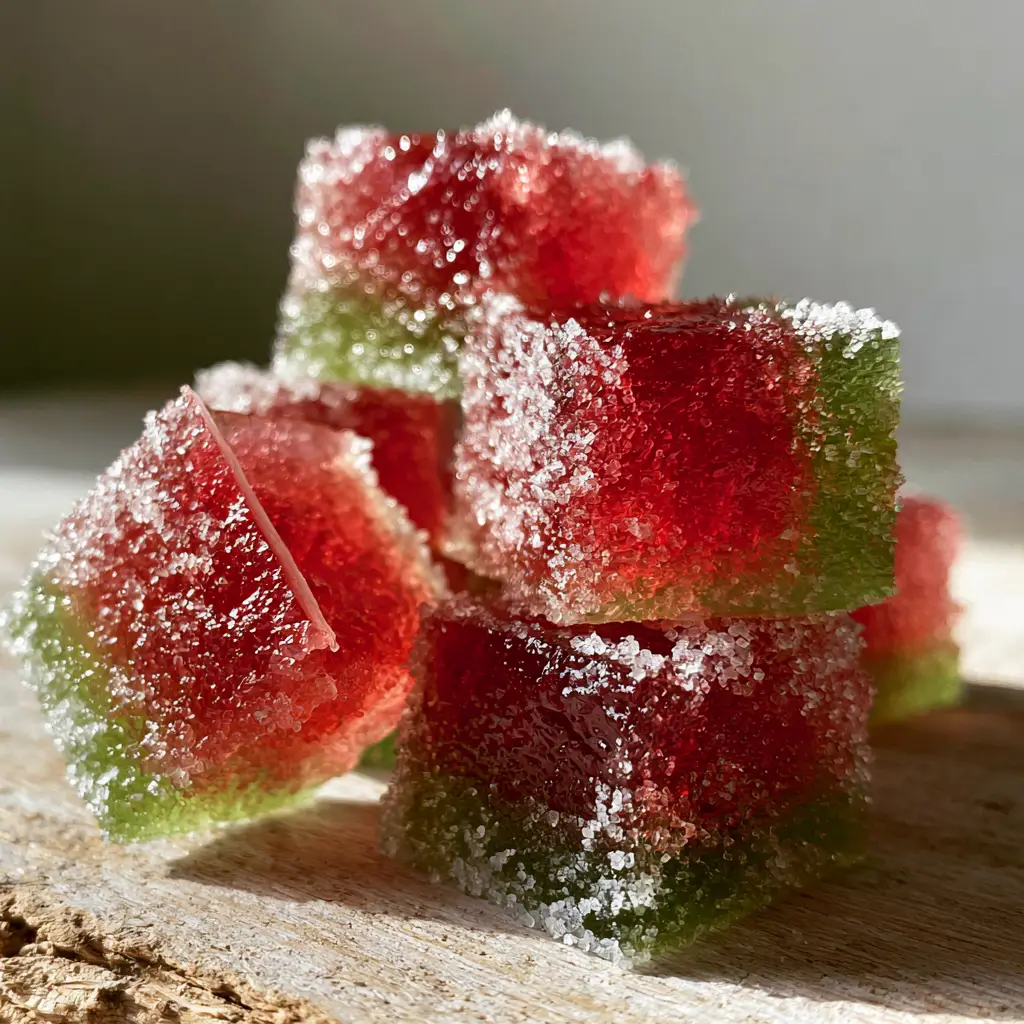
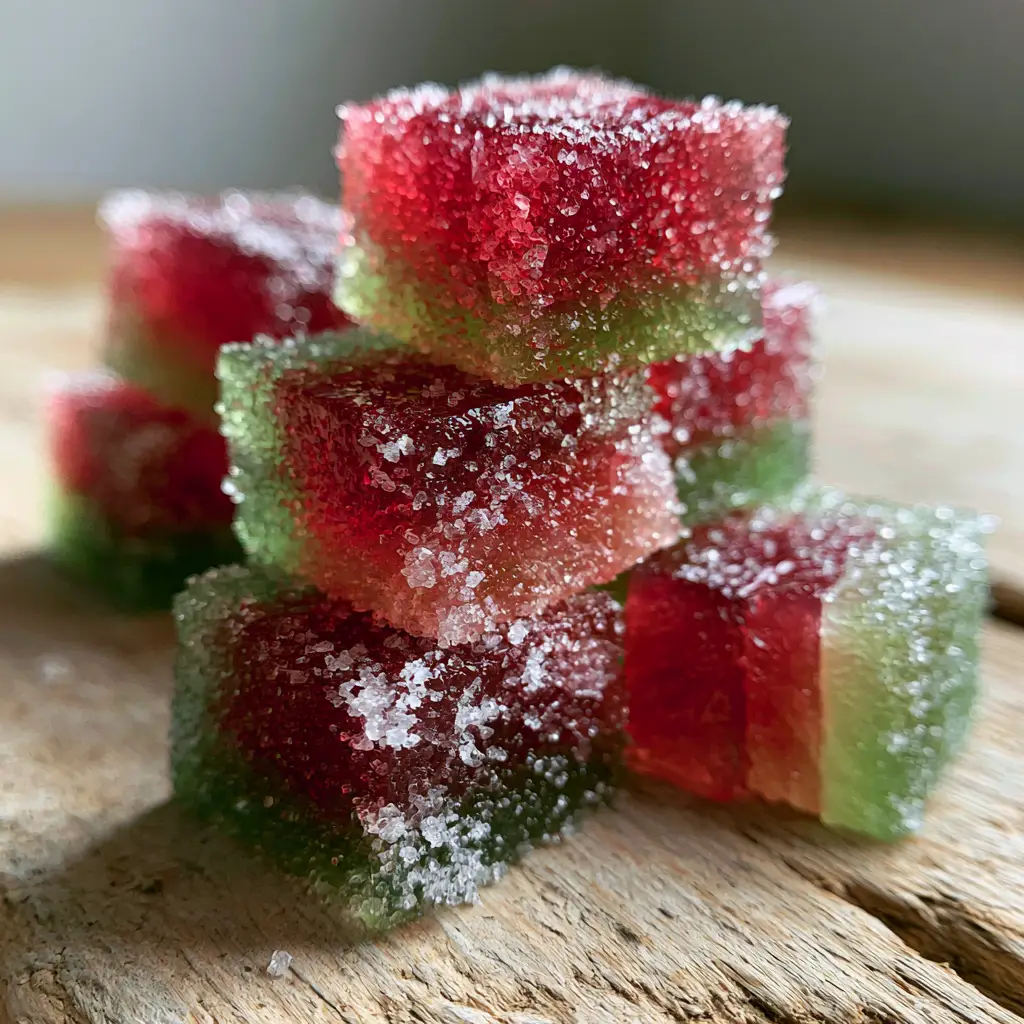
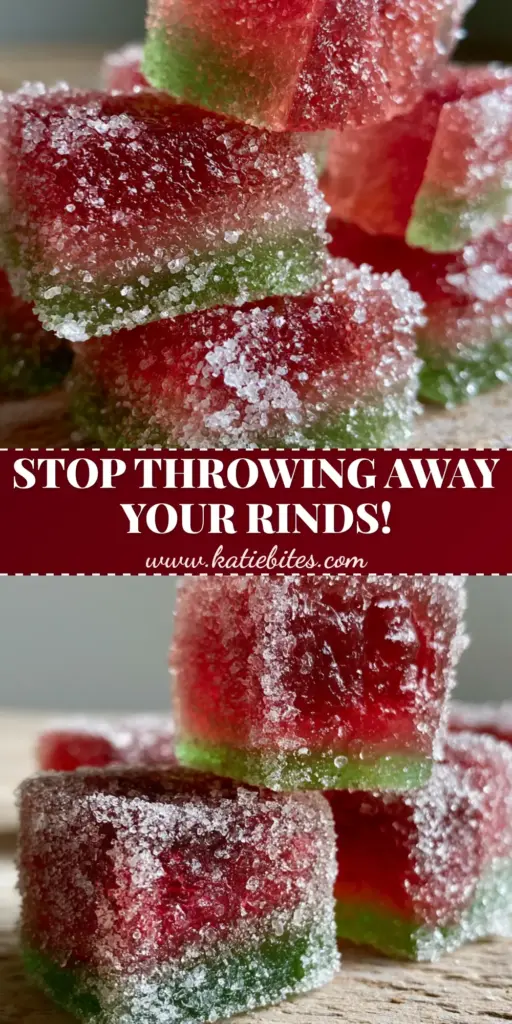
Imagine a confection that offers a dense, gummy chew followed by the crunch of fine granulated sugar, all while glowing with a vibrant ruby red center and a soft emerald green edge. By simmering the rind in a concentrated fruit juice reduction, we infuse the naturally porous structure with deep color and intense sweetness. The result is a professional-grade jelly that looks like it belongs in a high-end Parisian confectionery, yet is made entirely from what most people throw away.
This recipe bridges the gap between old-fashioned preserves and modern gummy candies, utilizing the natural pectin and structure of the watermelon’s white layer. Whether you are looking for a unique addition to your watermelon canapes display or a standalone sweet treat, these jellies are guaranteed to be the conversation piece of your next gathering. Let’s dive into the science of candying and the art of the perfect sugar crust.
Why You Will Fall in Love With These Glowing Watermelon Gems
- Visual Masterpiece: The striking contrast between the ruby-red fruit juice infusion and the natural emerald rind edge creates a stunning “jewel” effect.
- Textural Harmony: Experience a unique progression from the sparkling, gritty sugar coating to a dense, chewy, and glistening interior.
- Sustainable Sweetness: This recipe is the ultimate upcycling project, turning often-discarded rinds into a luxury dessert that rivals any mini fruit pizzas for beauty.
- Shelf-Stable Luxury: Once cured and sugared, these jellies last for weeks, making them perfect for gifting or long-term snacking.
Essential Components for Ruby Red Fruit Juice Reduction
Fresh Watermelon Rind: You will need the white part of the rind with a thin layer of pink flesh left on and the dark green skin peeled away to allow for maximum syrup absorption. This structural base provides the “gummy” bite without the need for gelatin.
Granulated White Sugar: Sugar acts as both the preservative and the textural coating, with fine crystals creating that essential sparkling finish. It draws moisture out of the rind while replacing it with a shelf-stable syrup.
Watermelon and Pomegranate Juice: Combining fresh watermelon juice with a splash of pomegranate creates that deep ruby red juice reduction mentioned in the visual blueprint. The pomegranate adds the necessary acidity and a darker pigment to tint the translucent rind.
Citric Acid or Lemon Juice: This “invisible” ingredient is scientifically required to prevent the sugar from crystallizing in the pot and to provide a bright, tart contrast to the sweetness. It also helps set the natural pectins for a firmer chew.
Fine Sugar Dust: A secondary coating of extra-fine sugar ensures every millimeter of the jelly is encrusted in light-catching crystals. This prevents the jellies from sticking together and gives them that professional “handheld” look.
Professional Tools for Candying Success
To achieve the glistening syrup residue and the perfect candied state, a heavy-bottomed stainless steel pot is non-negotiable for even heat distribution. You will also need a sharp vegetable peeler to remove the tough outer skin while preserving the emerald green edge. A wire cooling rack is essential for the drying phase; without airflow, your jellies will remain sticky rather than forming that iconic gummy skin. Finally, a candy thermometer helps you monitor the syrup’s concentration to ensure the rind reaches the correct density.
How to Create Translucent Watermelon Rind Jellies
Prepping the Rind for Maximum Transparency
Start by slicing your watermelon into manageable wedges. Trim away the outermost dark green skin with a vegetable peeler, but leave a thin, pale green layer—this will become your “emerald edge” after simmering. Cut the white rind into uniform 1-inch (2.5cm) cubes, ensuring a tiny sliver of pink flesh remains on one side to anchor the ruby red color.
The Slow Infusion and Juice Reduction
In your heavy pot, combine 2 cups (480ml) of sugar, 1 cup (240ml) of watermelon juice, and 1/2 cup (120ml) of pomegranate juice. Bring this to a simmer until the sugar dissolves, then add your rind cubes. Lower the heat and let them gently bathe in the liquid for 45 to 60 minutes. You are looking for a visual cue: the rinds should transform from opaque white to a glowing, translucent state that looks like stained glass.
Achieving the Dense and Chewy Texture
Continue simmering until the syrup has reduced to a thick, glistening residue that coats the back of a spoon. The cubes should now be heavy and saturated with the ruby red reduction. Turn off the heat and let them sit in the cooling syrup for another 20 minutes to “plump” up. This ensures the interior is moist and gummy when sliced open, exactly as seen in our visual guide.
The Curing and Sugar Encrusting Process
Lift the cubes out of the syrup using a slotted spoon and place them on a wire rack set over parchment paper. Let them air dry for at least 12 to 24 hours in a cool, dry place until they are tacky but no longer dripping. Toss the tacky cubes in a bowl of fine granulated sugar, pressing firmly so the crystals catch the light. This creates that heavy coating of granulated sugar crystals that defines the Watermelon Rind Jellies.
Expert Tips for the Perfect Candied Crunch
- Watch the Temperature: If your syrup gets too hot (above 235°F/113°C), the jellies will become hard candy rather than chewy jellies. Keep it at a gentle simmer.
- The Drying Secret: If you live in a humid climate, use a small desk fan to blow air over the jellies while they sit on the wire rack to speed up the curing.
- Color Depth: For a more intense ruby center, add a single drop of natural red food coloring to the juice reduction if your watermelon juice is pale.
- Acid Balance: Don’t skip the citric acid; it provides the “zing” that makes these taste like premium candy rather than just sweet vegetables.
Storage and Long-Term Freshness
Store your finished Watermelon Rind Jellies in an airtight glass jar at room temperature for up to 3 weeks. If the sugar begins to look “wet” or dissolves, simply re-toss them in a fresh bowl of granulated sugar. For longer storage, you can keep them in the refrigerator, though they may lose some of their crystalline sparkle due to moisture. These do not freeze well, as the ice crystals will destroy the delicate gummy cellular structure of the rind.
What to Serve With Watermelon Jellies
These jellies are a spectacular finale to a summer feast. Pair them with a refreshing mexican watermelon salad to showcase the fruit in two completely different textures. They also make a surprising and delightful garnish for a watermelon feta salad, adding a sweet, chewy element to the salty cheese. If you are hosting a brunch, serve these alongside eggnog french toast for a pop of jewel-toned color and summer brightness.
Frequently Asked Questions
Yes! Unlike traditional gummy bears that use gelatin, these Watermelon Rind Jellies rely on the natural structure of the rind and sugar reduction for their chewy texture.
Yes! Cantaloupe and honeydew rinds also candy beautifully, though they have a slightly different flavor profile and will require different juice pairings for color.
While not strictly required, pomegranate or cranberry juice provides the ‘ruby red’ center seen in the photos. Without it, the jellies will be a pale, translucent lime green.
Ensure the jellies are fully cured and tacky (not wet) before rolling in sugar. If your kitchen is humid, the sugar may dissolve; store them with a silica packet or in a very dry area.
This usually means they haven’t simmered long enough. The rind must reach a fully translucent ‘stained glass’ state to be tender and chewy. Continue simmering until the white part disappears.
The Ultimate Watermelon Rind Jellies Recipe
Watermelon Rind Jellies: The Ultimate Jewel-Toned Candied Summer Treat
Ingredients
Equipment
Method
- Using a vegetable peeler, remove the tough dark green outer skin of the watermelon. Leave the white rind and a thin 1/4 inch layer of the pale green edge. Slice into 1-inch cubes, ensuring a tiny bit of red flesh remains on one side for color.
- In a heavy pot, combine the sugar, watermelon juice, pomegranate juice, and lemon juice. Bring to a boil, stirring until the sugar is fully dissolved and the liquid begins to look like a ruby red reduction.
- Add the rind cubes to the boiling syrup. Reduce heat to low and simmer gently. After about 60 minutes, the rinds will become translucent and the edges will glow emerald green.
- Once the syrup has thickened to a glistening residue, remove from heat. Stir in the citric acid and let the jellies sit in the hot syrup for 20 minutes to absorb the maximum amount of color.
- Transfer the cubes to a wire rack. Let them dry at room temperature for 12-24 hours until they feel tacky and dense, but not wet.
- Toss the cured jellies in a bowl of fine granulated sugar until a heavy coating of crystals forms. Serve once they are glistening and dry to the touch.
Notes
If the jellies are too sticky after 24 hours, use a fan to increase airflow.
Start Your Zero-Waste Candy Journey Today
Making Watermelon Rind Jellies is a rewarding exercise in culinary patience and visual artistry. There is something truly magical about watching a scrap of rind transform into a glowing, ruby-red jewel encrusted in sparkling sugar. It’s a recipe that proves with a little science and a lot of love, nothing in the kitchen has to go to waste. If you enjoyed this transformation, please leave a comment below and share your photos with us on Pinterest!